Is Builder Gel Safe? Risks, Allergies & How to Reduce Them
Builder gel is safe for most healthy adult nails when applied, cured and removed correctly. The main risks are acrylate allergy (skin sensitisation), UV exposure during curing, and mechanical damage from aggressive filing or forced removal.
Quick answer
For most healthy adults, builder gel is a low-risk cosmetic service. The two real risks are (1) acrylate allergy, which develops from repeated skin contact with uncured gel and is the main reason gels must be fully cured before skin contact, and (2) mechanical damage from over-filing the natural nail during prep or removal. UV exposure during curing is small but real; you can reduce it further with fingerless UV-shield gloves.
On this page
Quick risk summary
Builder gel has three real risks: acrylate allergy, UV exposure during curing, and mechanical damage from filing. All three are predictable and reducible. Used on healthy nails by a competent technician, or carefully at home with the right boundaries, builder gel is a low-risk cosmetic service.
Acrylate allergy: the risk to take seriously
The methacrylates that make UV/LED gels cure can also cause sensitisation. Repeated skin exposure to uncured or under-cured gel raises the risk of allergic contact dermatitis. Because acrylates also appear in some medical and dental materials, a suspected reaction should be assessed by a qualified clinician.
To reduce the risk:
- Never let uncured gel touch your skin. Wipe spills immediately with a cleanser-soaked wipe.
- Cure each layer fully before applying the next. Under-cured gel stays allergenic even when it feels hard.
- Avoid "water-insoluble" inhibition layers that are not removed; they leave allergens on the surface.
- Stop and seek medical advice if you see persistent redness, itching, swelling or tiny blisters around the nail.
UV exposure during curing
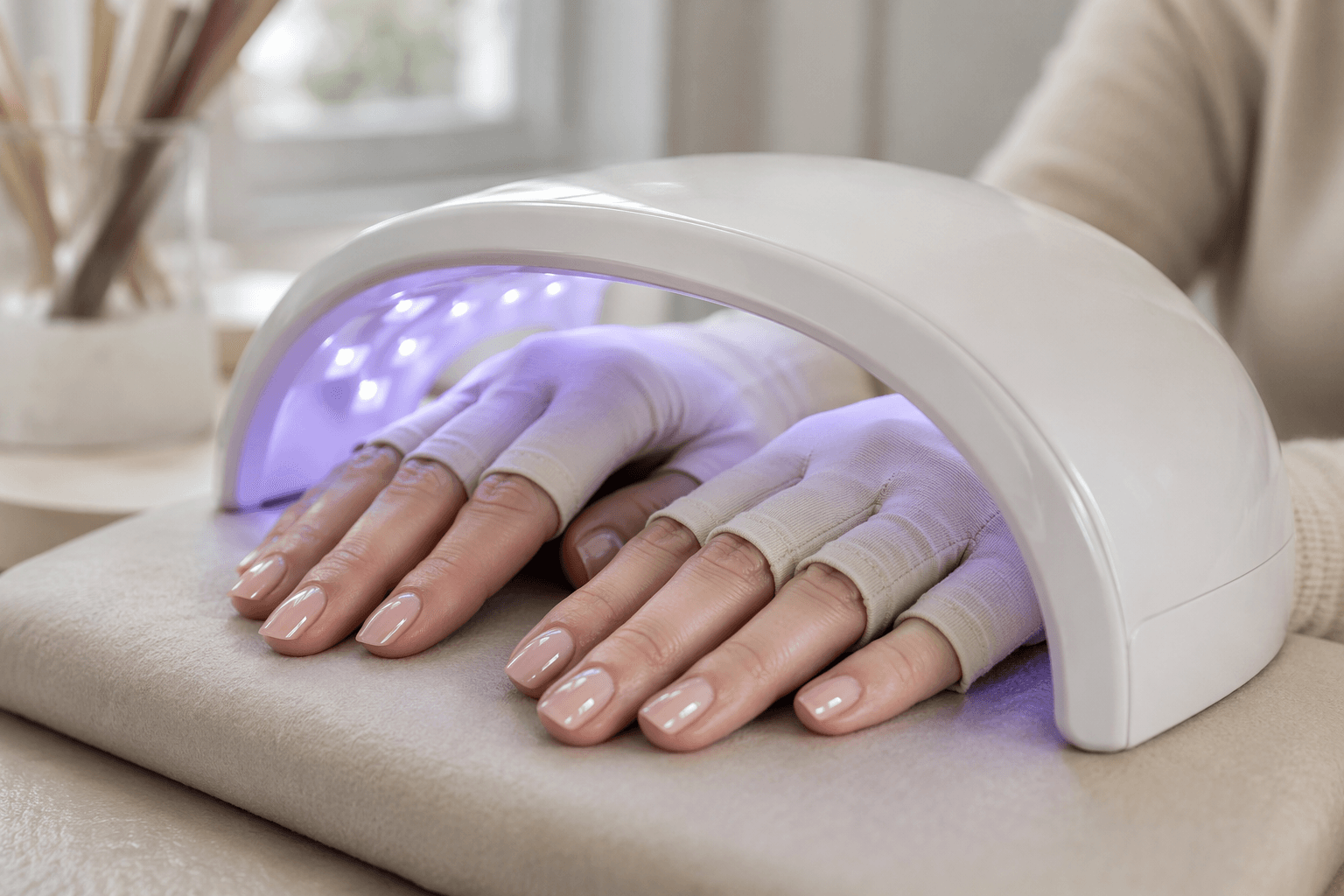
Nail lamps emit mainly UVA. The dose per session is small, but it adds up over years of infills. Fingerless UV-shield gloves cut exposure to the back of the hand while leaving the nail exposed.
Mechanical damage
The single biggest cause of "my nails were ruined" is not the gel. It is aggressive prep or forced removal. The fix is process, not product:
- Prep should lightly etch the surface, not thin the plate.
- Soak-off products should be removed with acetone for the time specified by the manufacturer. Never heat acetone.
- Hard builder gels are e-file only. Never force-peel.
Stop-sign signals
Stop wearing any overlay and see a professional, and a doctor if needed, if you notice:
- Green or grey discolouration under the gel (possible bacterial colonisation).
- Persistent redness, itching, swelling or tiny blisters around the nail (possible allergy).
- Pain on pressure, or a nail lifting away from the bed.
- A nail that has separated from the bed (onycholysis) or changed colour permanently.
What this means for you
Builder gel is safe when the gel is fully cured, the prep is gentle, and the removal is patient. The risk you actually control is removal. Book it as a separate service if you are tempted to peel.
For practical boundaries, read the DIY application guide and check when an infill or removal is due.
Frequently asked questions
Yes. Acrylates in gel nail products can cause allergic contact dermatitis, especially after repeated skin exposure to uncured or under-cured product. Avoid skin contact, use compatible curing equipment and stop use if a reaction appears.
Sources & references
Next on your path